What is Product Thinking?
Before we start, you should know a few things. Like, what is a product?
A product is basically anything that does some work, or achieves a goal, or solves a problem. Do you agree?
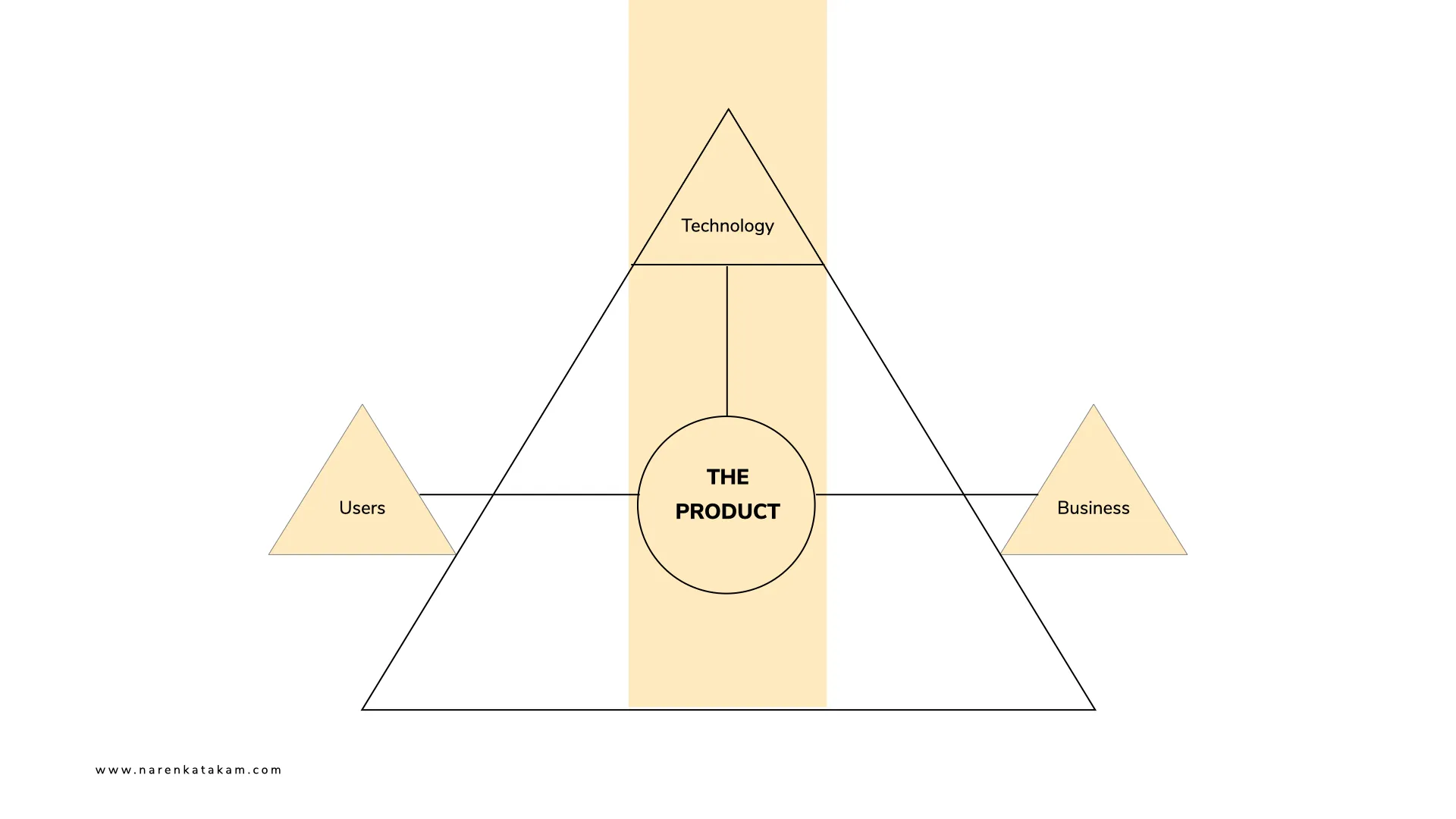
A product is something that originates from users as a problem that they are facing (problem space that we talked about in Lesson 2). The business solves that user problem (solution space) and provides the user with a product.
So, a product is like a bridge between the user and the business. A bridge between the problem space and solution space.
But, how do we go from knowing a user problem to building the solution?
Do you build a lot of features? Do you give users exactly what they ask for? Have you ever thought about it?
Well, there is a process that we can follow to build products that provide real value to the user. This process is called “Product Thinking”.
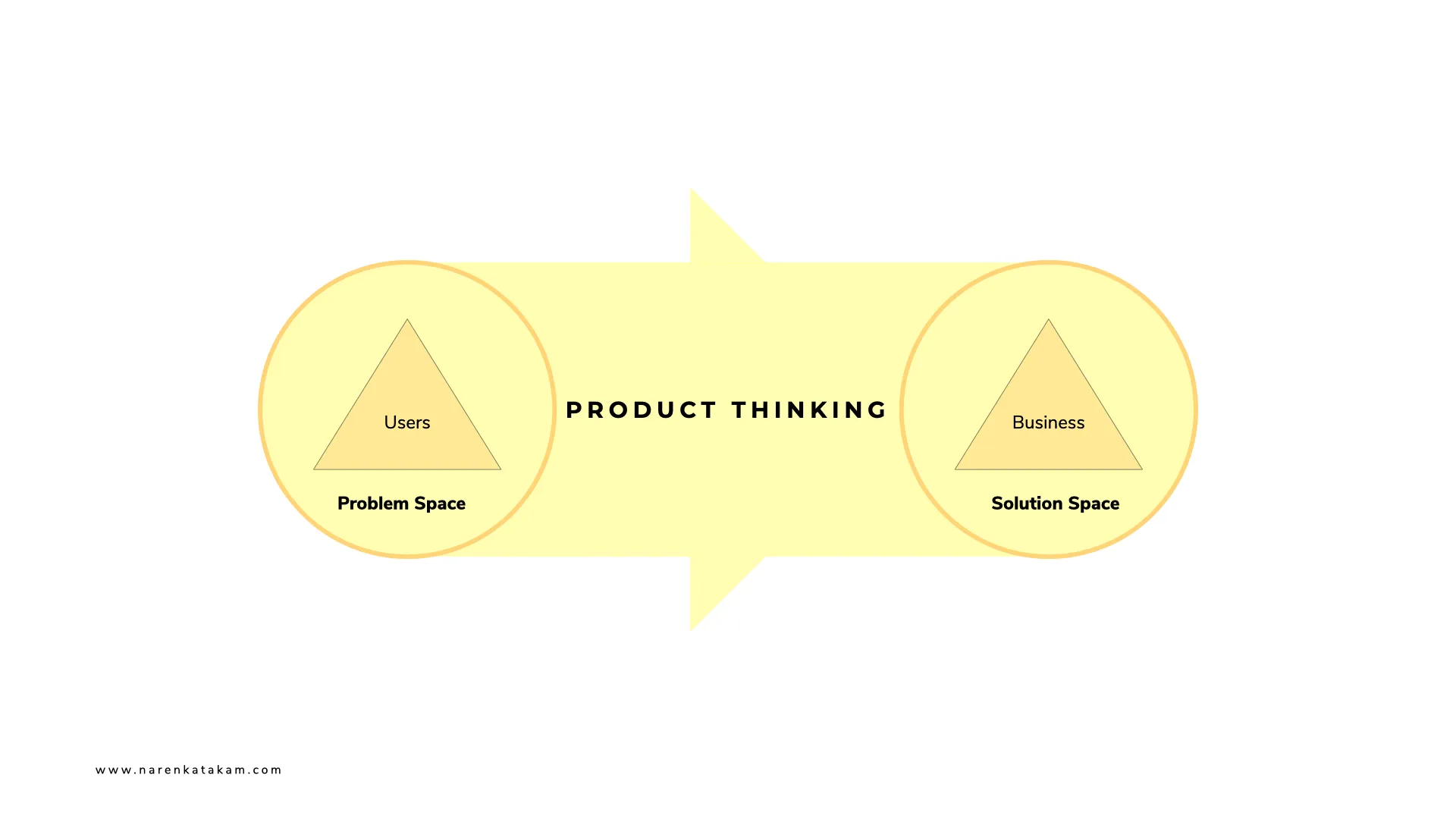
Product thinking is the journey from the problem space of the users to the solution space of the business. The goal of this journey is to reduce the gap between users and the business.
But, Why do we need it?
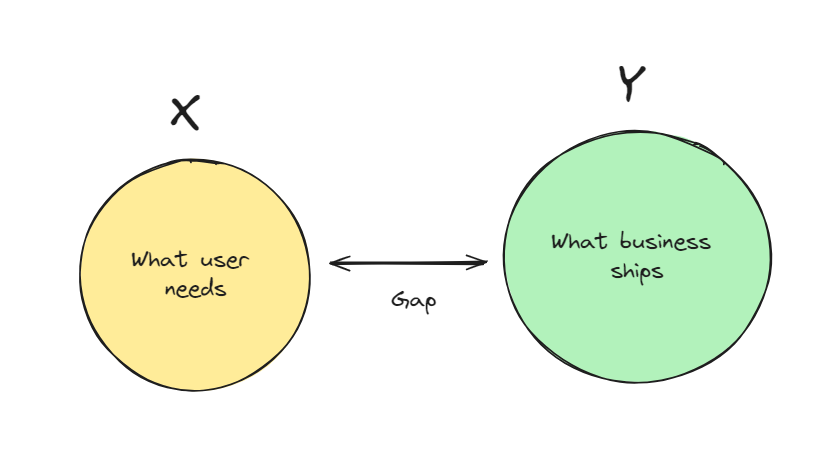
Imagine a scenario where your user need something, let’s call it X. The user needs X.
Now, the business decided that the best way to go forward was to build and ship Y. The business can have multiple reasons to believe that Y is the best thing to ship, like their lack of customer needs.
What will happen then? There will always remain a gap between X and Y. This gap will always keep the need (can also say market) away from the product. If X and Y would have been the same or similar, this gap would have been really less.
What does this less gap mean? Product Market Fit. (Search for it, take it as your homework)
Now, no business would want to be in a situation where this gap is too big, right? That’s why they need product thinking to understand the users well, the market well and to come up with something that adds real value to them.
The Product Thinking Process
Now that we know what product thinking is and why we need it, we also need to understand how we can implement it while building products.
-
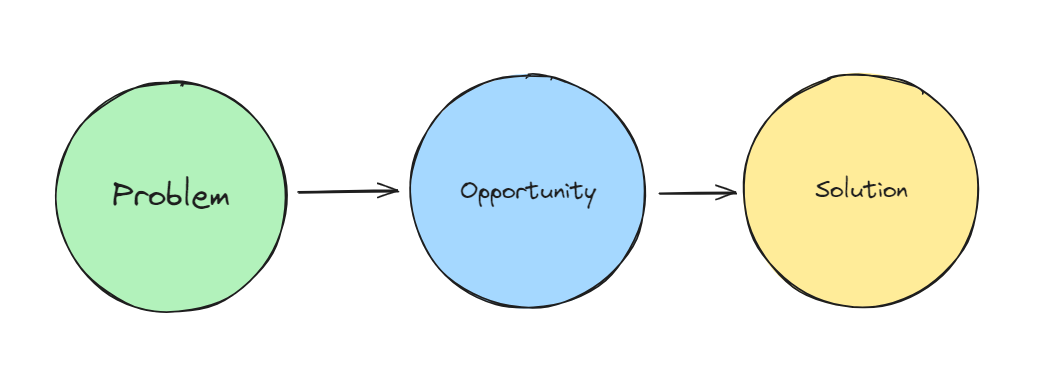
Problem
The first thing you need to do is identifying the real problem that the user faces. For this, they don’t only rely on the user research but also try to understand the market and competitors. Product teams identify a user problem and analyze it from multiple perspectives to determine the value of solving this issue.
There are multiple frameworks that you can use to identify the problems your users face like “The Mom Test” and “JTBD” framework. Don’t worry about these terms right now, we will dive deep into each of them as we move forward.
Once identified, we frame the problem so that it can be defined well and presented to the stakeholders in an easy manner.
-
Opportunity
Next, product teams assess how they might solve the problem and what that will mean for the organization and its users, including the size of the opportunity and the return on investment. They also look at the market opportunity and how solving this problem might increase the organization’s market share or attract new customers.
-
Solution
While assessing the opportunity, product teams may come up with multiple solutions and build prototypes to test ideas and hypotheses. Finally, the product managers must analyze the results and decide which solutions solve the problem best.
They must consider multiple factors, including:
- Possible ROI (return on investment)
- Constraints - including financial, human resources, and technical limitations
- How does solving this problem align with the current product roadmap
- Does this new product align with organizational goals?
The goal of this process is to focus on the problem first and understand the needs and motivations behind it. Doing that well increases the probability of building something useful, but it does not guarantee product-market fit. Teams still need to test whether the problem is frequent and important, whether the solution changes behavior, and whether the business can deliver it sustainably.
Product thinking checklist
Before recommending a feature, answer five questions: Who is the user? What evidence shows the problem exists? Why does it matter now? What outcome should change? What is the smallest test that could reduce uncertainty? If your answer begins with a solution, pause and restate the underlying problem.
Practice on a familiar app: pick one frustrating moment, describe the user and context, list three possible causes, and propose a test before proposing a build. That is product thinking in action.