What’s Product Discovery?
In short, product discovery is a process that helps product teams refine their ideas by deeply understanding real user problems and then landing on the best way to solve them.
This might sound similar to product thinking only, but there’s a difference. Product Thinking is a way of thinking about the whole product, it’s a framework. Product Discovery is a whole process that you do to come up with final solution backed by data. In a way, product discovery is a part of product thinking.
The standard process for prioritizing what the delivery team works on looks like this:
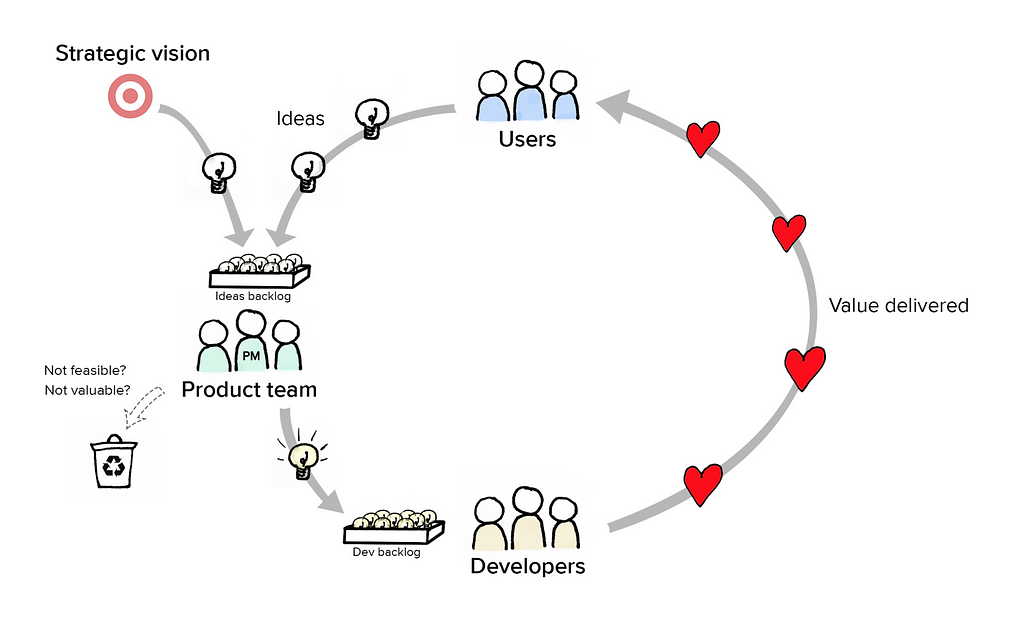
What if we invested more in researching and validating ideas upfront before we ever sent them to delivery?
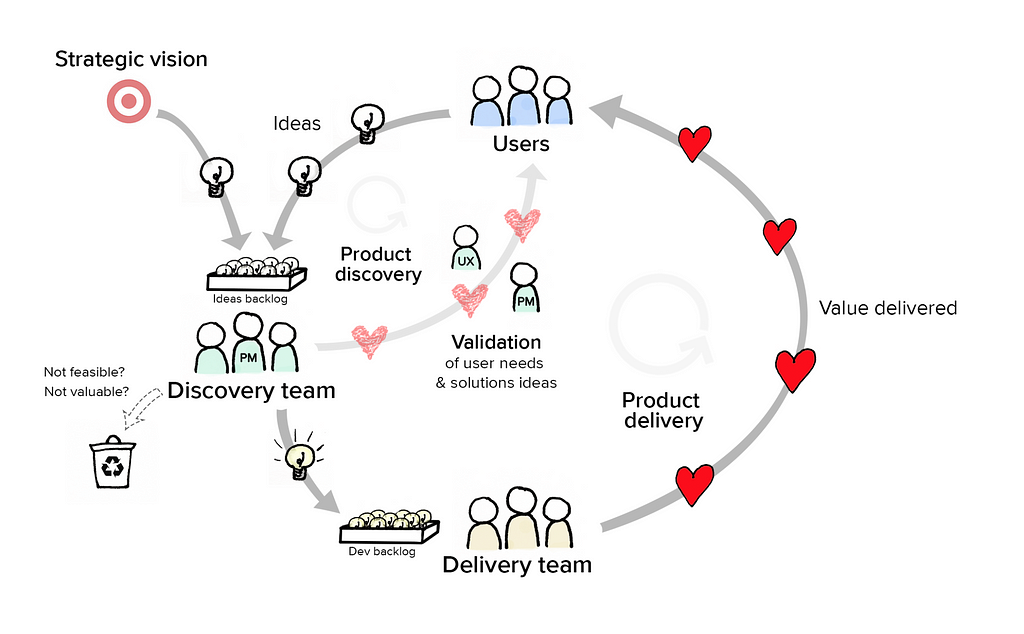
What does this image really mean?
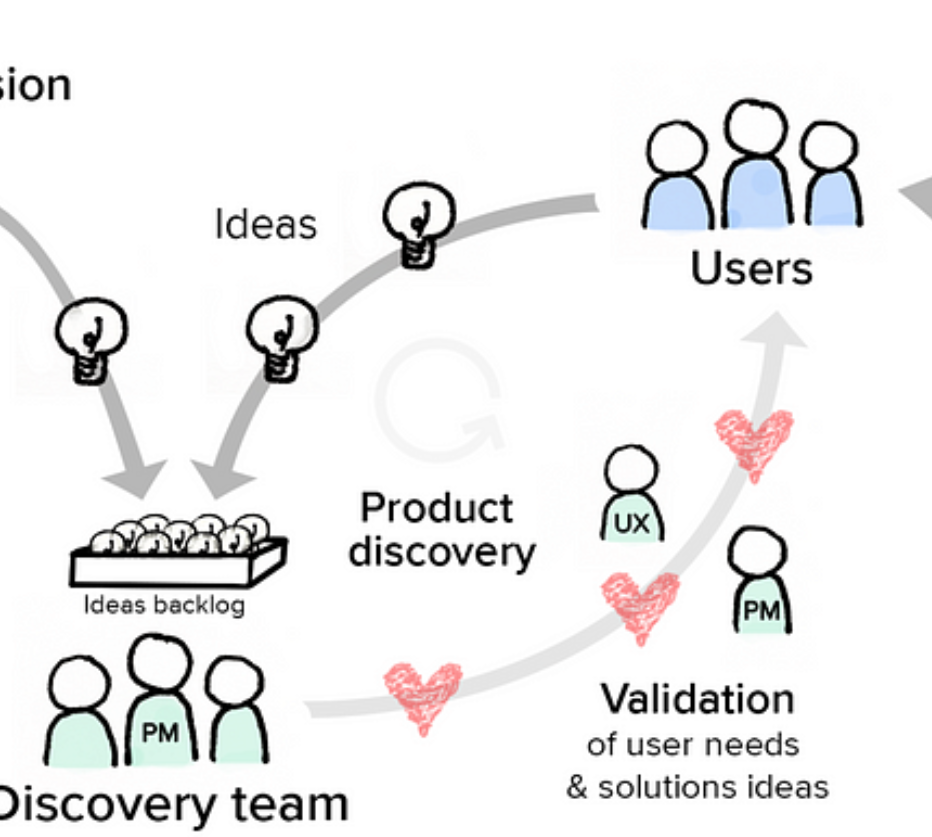
Look at this smaller loop in the bigger loop. This smaller loop is Product discovery process.
In product discovery, you try to understand your user well, then come up with solutions, and then validate those solutions fast with your users. This validation part tells you a lot about how good your solution was and what kind of changes you can do to the product before really launching it to all the users.
As Marty Cagan says - “First, you need to discover whether there are real users out there that want this product… Second, you need to discover a product solution to this problem that is usable, useful, and feasible.”
Product Discovery happens in both. If you pitch an idea to the users and they don’t see themselves using it, they don’t want it. If you ship something and they don’t use it, they don’t want it.
And if you ship something, users try it, find it useful and give a lot of feedback, you will eventually reach a good product solution to the problem.
What are Key Steps in the Discovery Process?
Step 1: Power up your customer empathy by understanding the underlying needs and feelings of customers. Create a complete picture of your customer by crowdsourcing different perspectives across your team.
Step 2: After you understand the user needs you are trying to address, you must then clearly define them. Aim to nail down one sentence that covers the entire problem you are trying to solve.
Step 3: Make sure that you are actually working on problems that need to be solved. How big is the pain that your users are experiencing? How much value will tackling the pain truly add?
Step 4: Figure out which of the identified problems you should tackle first and prioritize that.
Step 5: After you isolate specific user problems, it is best to reframe them into chunks that can be attainably solved. Then, you ideate to figure out how you plan to solve your users’ problems.
Step 6: You build a quick prototype for some of your users for whom you are solving this problem.
Step 7: Once done, you test your solution. Testing determines whether or not the proposed solutions are actually capable of solving the problem
Once these are done, you have something which you didn’t have. Results. The data from this whole experimentation gives you much more confidence in what should be built and what should be stopped right now.
Based on this evidence, you can make better decisions and increase the probability of building something useful. Discovery does not end with a single “validated” idea; it continues as the team learns from delivery and real-world usage.
A lightweight discovery plan
Write the biggest assumption behind your idea in one sentence. Classify it as a value, usability, feasibility, or viability risk. Then choose the cheapest credible test: interviews for problem evidence, a prototype for usability, a technical spike for feasibility, or a pricing test for viability. Define in advance what result would make you proceed, revise, or stop.
The output of discovery should be evidence and a decision—not a large presentation. Keep an assumption log so stakeholders can see what is known, what remains uncertain, and why the next test is worth running.